
Deployment & Security
Run Cambrion where your data has to stay, the way you want
Use Cambrion in the EU cloud, in your own private cloud or on-premises in your infrastructure. The on-premises installation can also be carried out remotely (remote deployment). Compare the operating models by data storage, responsibilities and technical prerequisites.
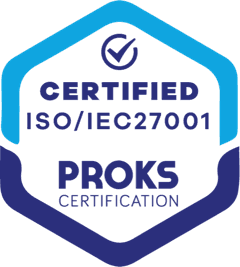
ISO/IEC 27001:2022 certified

AVPQ prequalification
Comparison
Operating models compared
Where your data stays, who runs it, what you need.
Operated by
Cambrion
Data location
EU infrastructure: T Cloud Public (formerly Open Telekom Cloud)
Isolation
Tenant separation at application level
Prerequisites
Browser access, API key
Services and control
AI models, OCR and checkbox detection as shown in the data flow below. Sign-in via Auth0, single sign-on via OpenID Connect.
Operated by
Your organisation, Cambrion supports on request
Data location
Your own cloud, e.g. AWS, Azure, GCP, T Cloud Public or STACKIT
Isolation
Agreed individually
Prerequisites
Kubernetes (Helm chart) or Docker
Services and control
Your network controls. Encryption keys are managed per customer.
Operated by
Your organisation, Cambrion supports on request
Installation
Also possible remotely (remote deployment)
Data location
Your data centre
Isolation
Documents and results in your own storage
Prerequisites
Kubernetes cluster or Docker, S3-compatible storage
Services and control
By default AWS Textract for high precision OCR and Auth0 for sign-in, single sign-on via OpenID Connect. Plus monitoring and usage reporting.
How your data flows in the EU cloud
Documents and results are stored in the EU. To extract data, the model gateway calls AI services from AWS and Google; the overview shows where each service runs.
Schematic overview of the data flow in the EU cloud. Documents and results are stored in the EU (T Cloud Public). The model gateway calls Claude on AWS Bedrock and Gemini on Google Vertex AI in EU regions and AWS Textract for high precision OCR in Frankfurt. Cambrion does not use customer documents to train models.
On-premises: technical prerequisites and operating responsibility
On-premises, Cambrion runs in your own Kubernetes cluster using Cambrion’s Helm chart; documents and results are stored in your own S3-compatible storage. The Cambrion stack itself needs about 4 CPU cores and 8 GB of RAM, excluding AI models, whose requirements come on top; you choose the models and where they run. Your IT installs updates; we support you on request. Your team installs Cambrion following our installation guide; an on-site visit is not required. Cambrion has no access to your data by default, and your organization is responsible for operations and availability.
Security & operations
Evidence you can check
Certification
ISO/IEC 27001:2022
Certified by Proks Certification. Scope: ISMS for software development and service delivery.
Announcement →
Transparency
Trust Center
Policies, certificates, security documents and subprocessors in one place.
Open ↗
Public sector
AVPQ prequalification
Listed in the official directory of prequalified companies.
Announcement →
Data protection
Data processing agreement
DPA under Art. 28 GDPR for the EU cloud. In a private cloud or on-premises, Cambrion has no access to your data by default.
Compliance →
FAQ
Frequently asked questions
Which deployment models does Cambrion offer, and how do they differ?
Cambrion offers three deployment models: the EU cloud, which Cambrion operates for you, with storage in the EU on T Cloud Public; a private cloud in your own cloud environment, for example AWS, Azure or GCP; and on-premises in your own Kubernetes cluster using Cambrion's Helm chart. In the EU cloud, Cambrion handles operations and updates. In a private cloud or on-premises, your organization operates the environment; on-premises, your IT installs updates and Cambrion supports you on request.
Does Cambrion use our documents to train AI models?
No. Customer documents are not used to train AI models and are used only to fulfill your processing request. More on data protection and security: Compliance & Security.
How long does Cambrion store documents, and how are they deleted?
Cambrion sets no automatic retention period: by default, documents and results stay stored for the term of the contract until you delete them, and we can agree on individual deletion periods with you. Deleting an execution through the API removes its record and the uploaded files. Backup and recovery follow the processes of our ISO 27001 certified management system; we can tell you about logs on request. In a private cloud or on-premises, Cambrion has no access to your data by default.
How is tenant isolation implemented, and which subprocessors does Cambrion use?
In the EU cloud, each customer has its own data scope; separation is enforced at application level. The Trust Center at trust.cambrion.ai lists the subprocessors. For the EU cloud, Cambrion concludes a data processing agreement (DPA) with every customer by default.
Technical depth
Further technical questions
Architecture, models, updates and monitoring are covered in the documentation or in a technical call.
Discuss your operating requirements
Tell us about your data, security and IT requirements. We’ll assess which deployment option fits.